kingsnake (analog supersurface)
2017-2019
construction flags, fiberglass, cabone rings, fence staples, monofilament, walking path

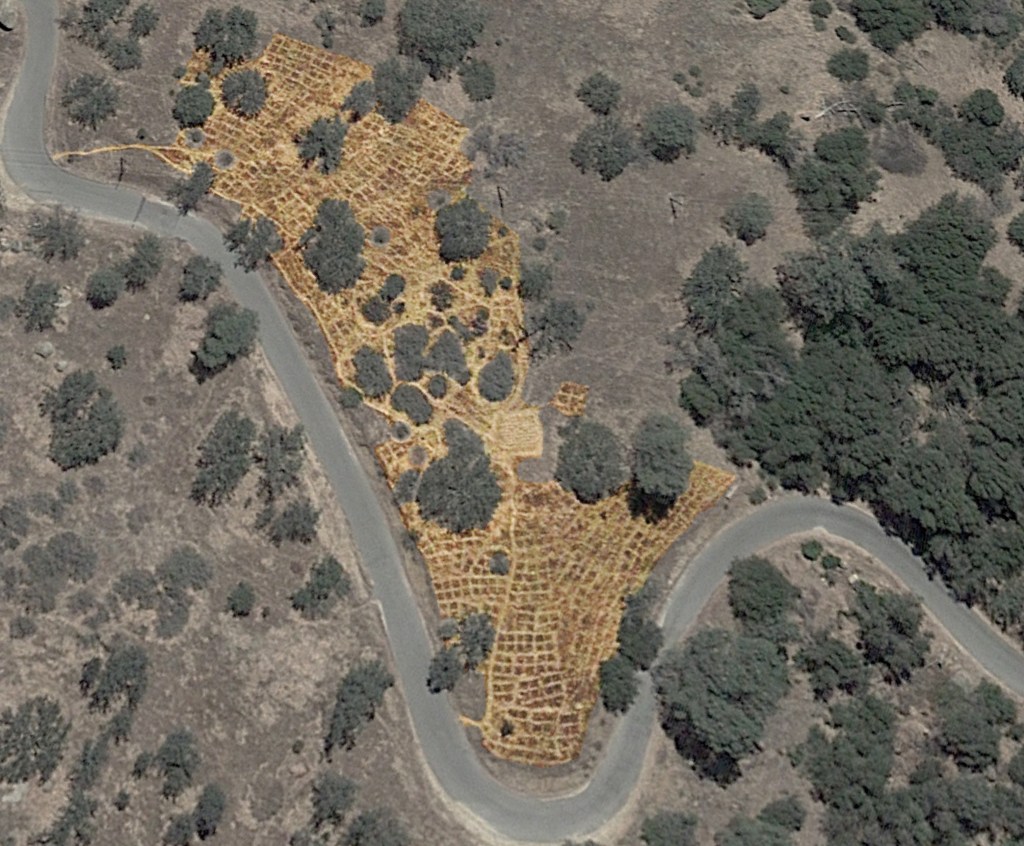
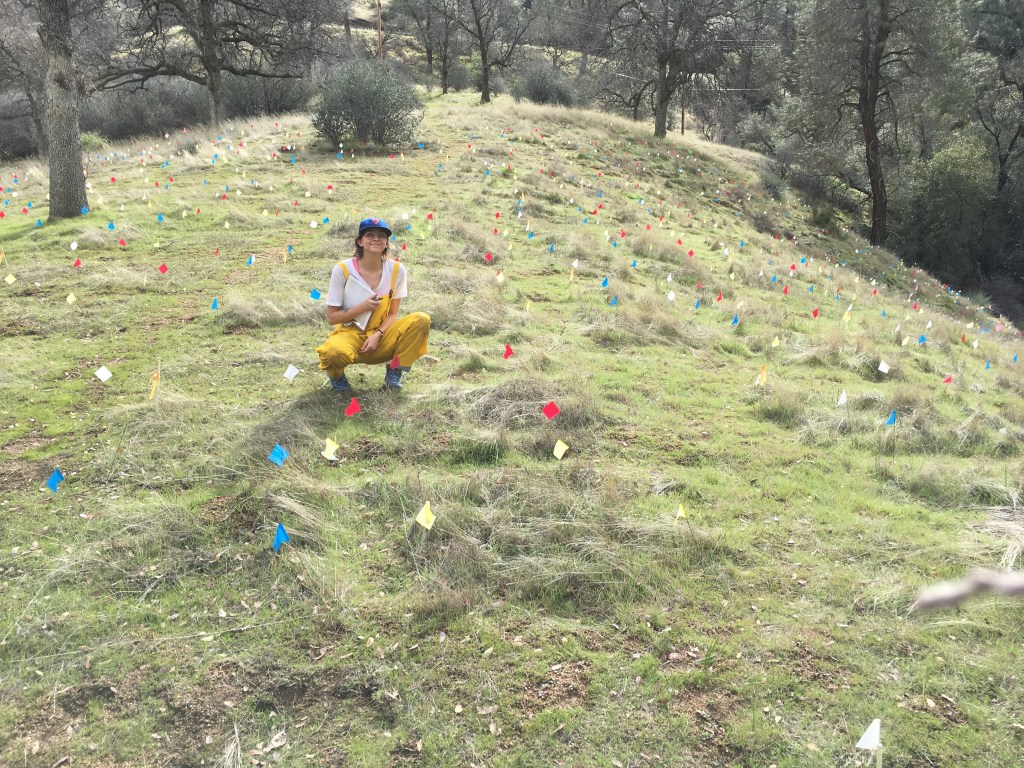
superstudio’s supersurface grid evokes a future where perfect mastery of the environment yields a new way of life. as an ecologist, i am skeptical of this vision: our most basic theories of how the ecological world functions leave much to be explained, much less controlled or mastered. in creating an “analog supersurface” in the process of conducting research for my PhD, i discovered that my grid — an effort to manage biological variation — was also an early attempt to build a collaborative relationship with a landscape (in this case, on Tübatulabal land in southern california). rather than anticipating a future of increased control, creating this supersurface was a meditation on the care with which we need to attend to what landscapes are telling us. opposite the vision of a supersurface, this can lead a new way of life in collaboration with the stochastic nature of even the most structured environments.
associated scientific paper(s)
James, A. R.M., Burnette, T.E., Mack, J., James, D.E., Eckhart, V.M., Geber, M.A. 2020. Species-specific variation in germination rates contributes to spatial coexistence more than adult plant water use in four closely-related annual flowering plants. Journal of Ecology, 108 (6) 1365-2745.13408, 2584-2600. doi: 10.1111/1365-2745.13408
James, A.R.M., Geber, M. A. 2025. The contribution of pollinator-mediated vs pollinator-independent interactions to plant reproduction. Ecological Monographs 95(1): e1649. https://doi.org/10.1002ecm.1649
 aubrie's bounce zone