exhibition: shore/lime/line/light
projection model
2023
18’ x 7.5’
multimedia installation. cattail (typha spp.), goldenrod (solidago spp.), Common reed (phragmites australis), spruce (picea sp.) lumber, salvaged brick (malden, MA), packing plastic, oyster shells, led lights, spotlights, cinderblocks
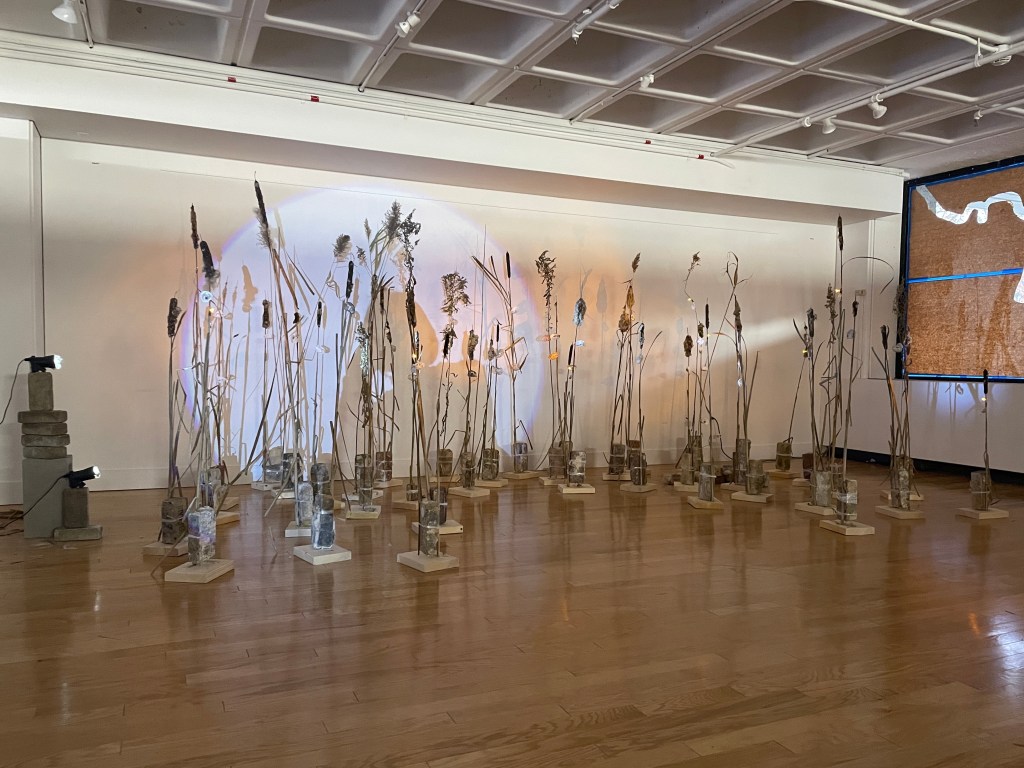
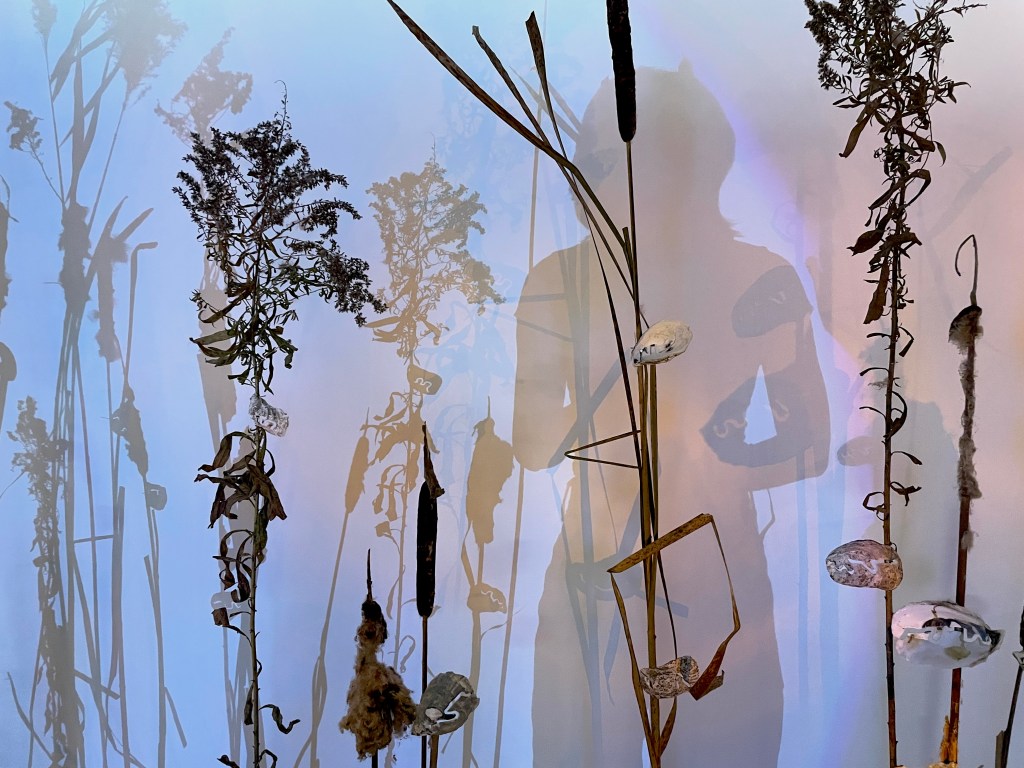
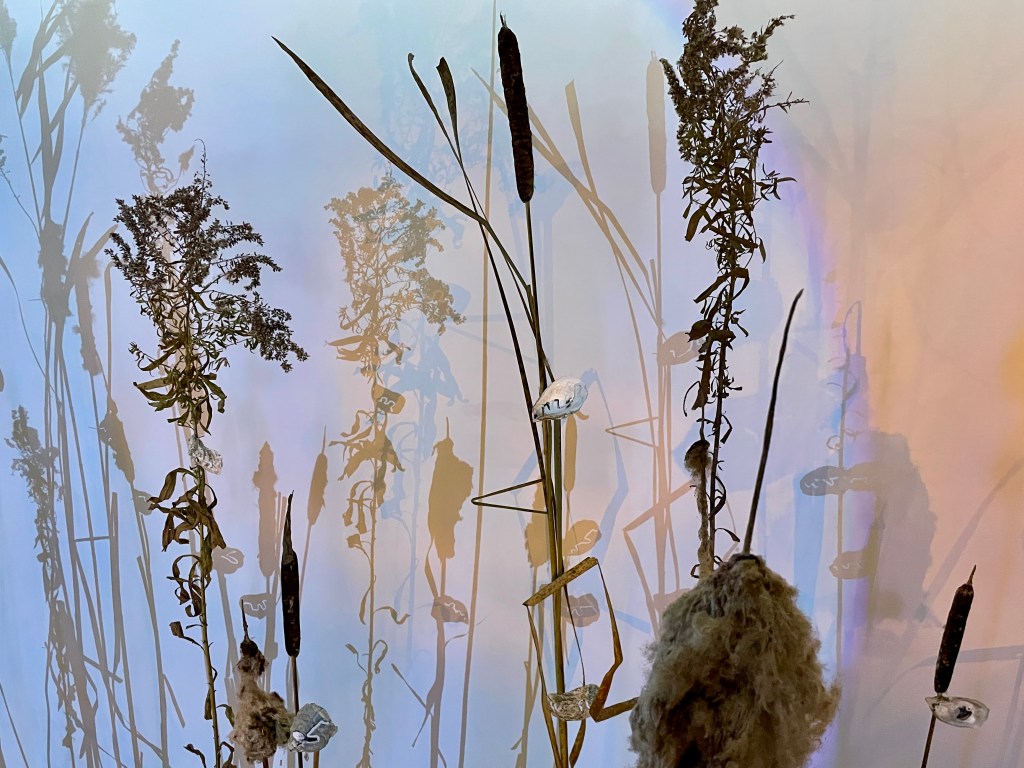
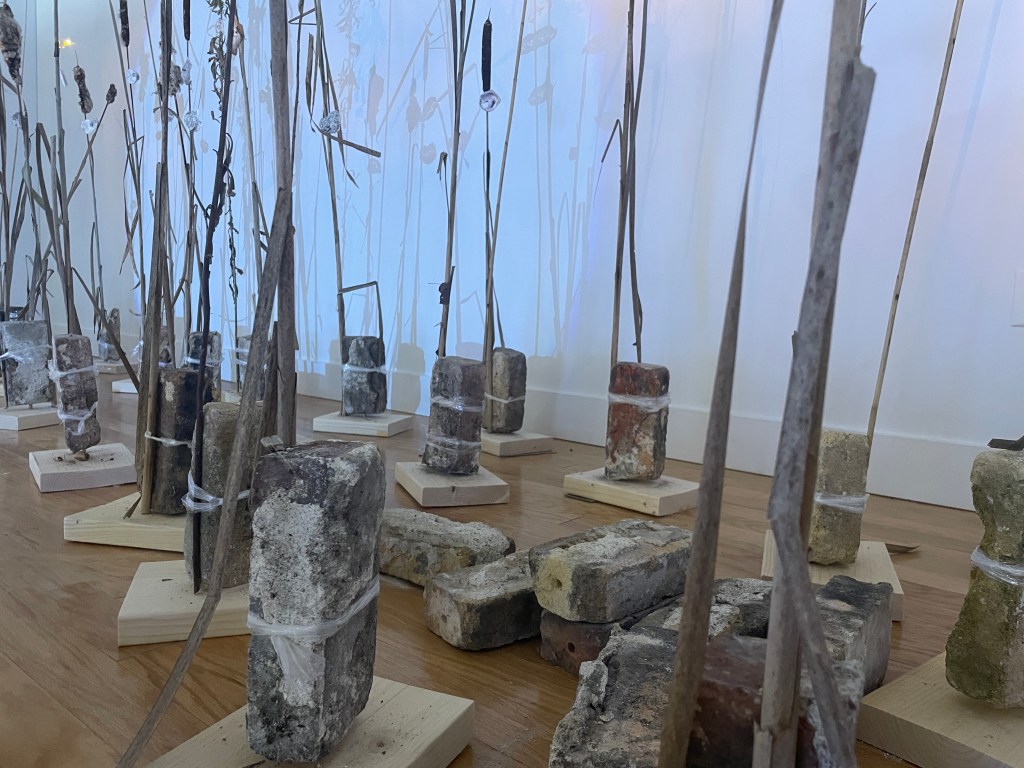
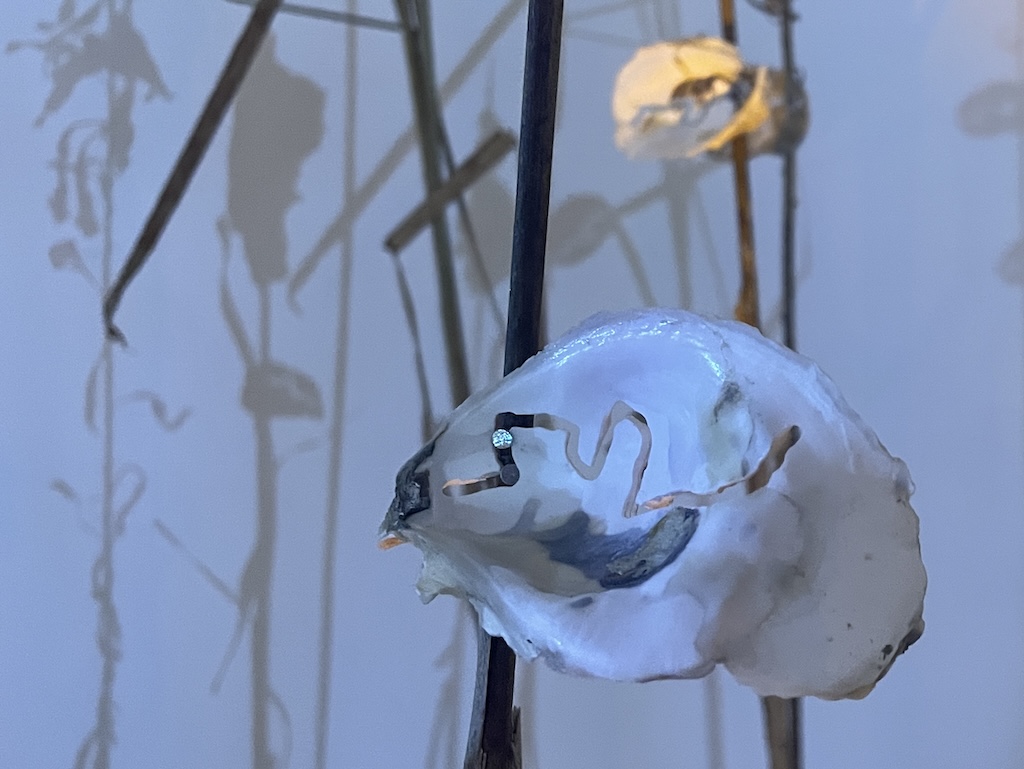
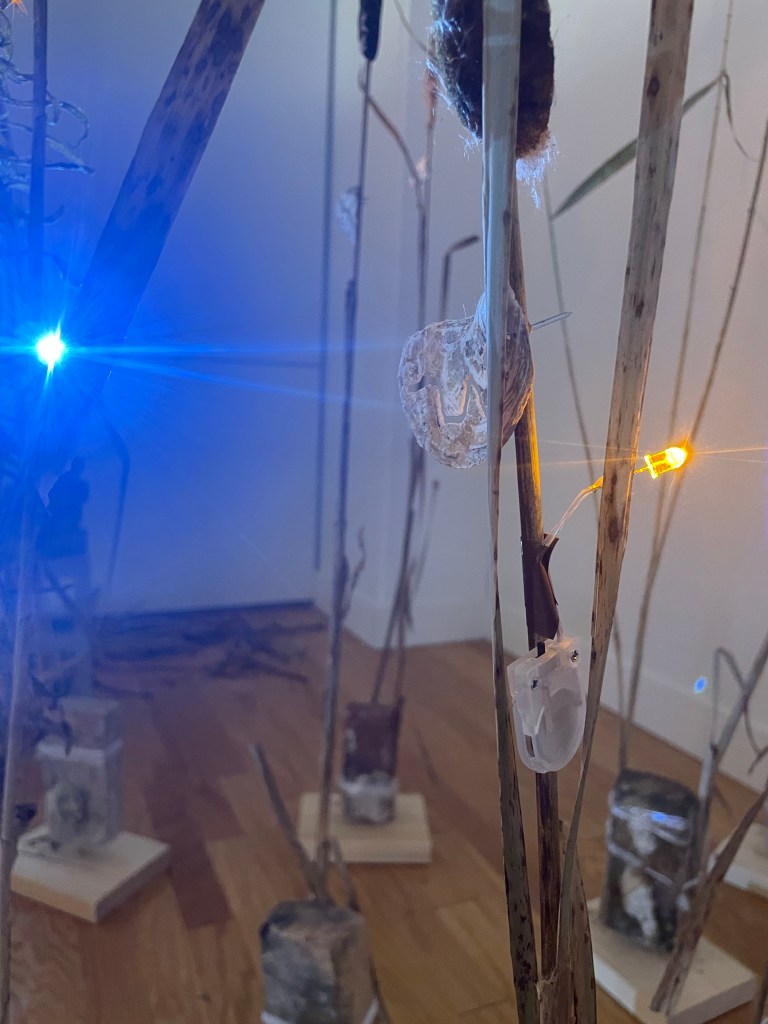
An installation combining past and present materials of a landscape with light and shadow to form an embodied, historical (instead of mathematical, ahistorical) ecological projection model.
river aperture (For a camera obscura)
2023
36′ x 6′
craft paper, blue painter’s tape
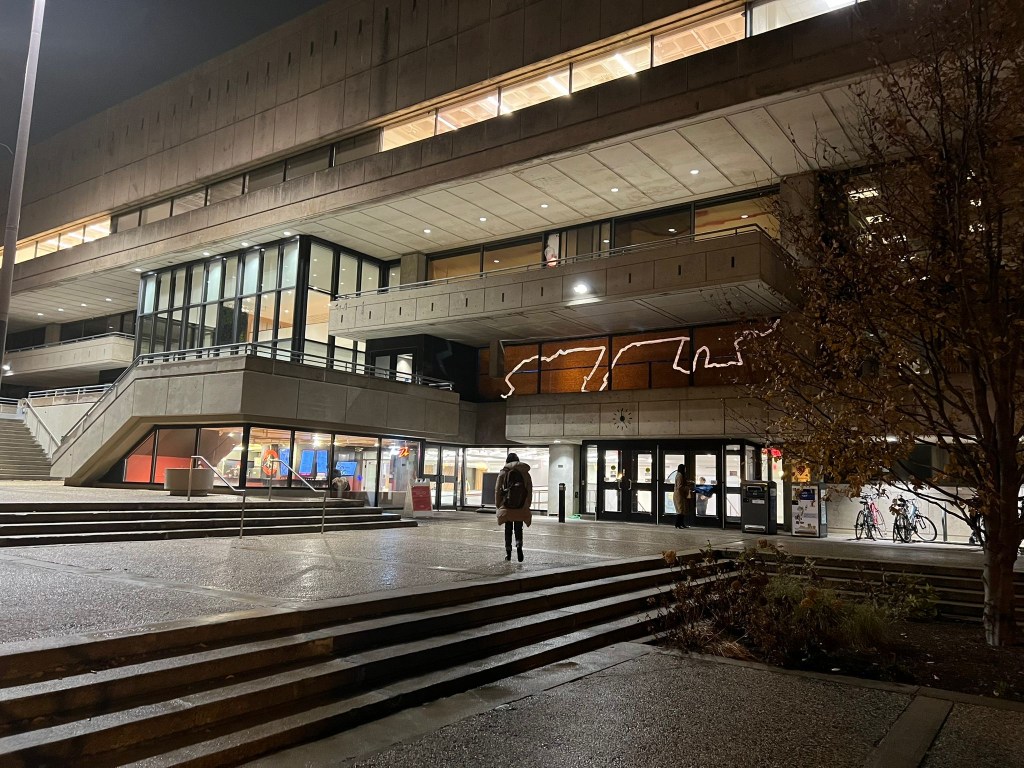
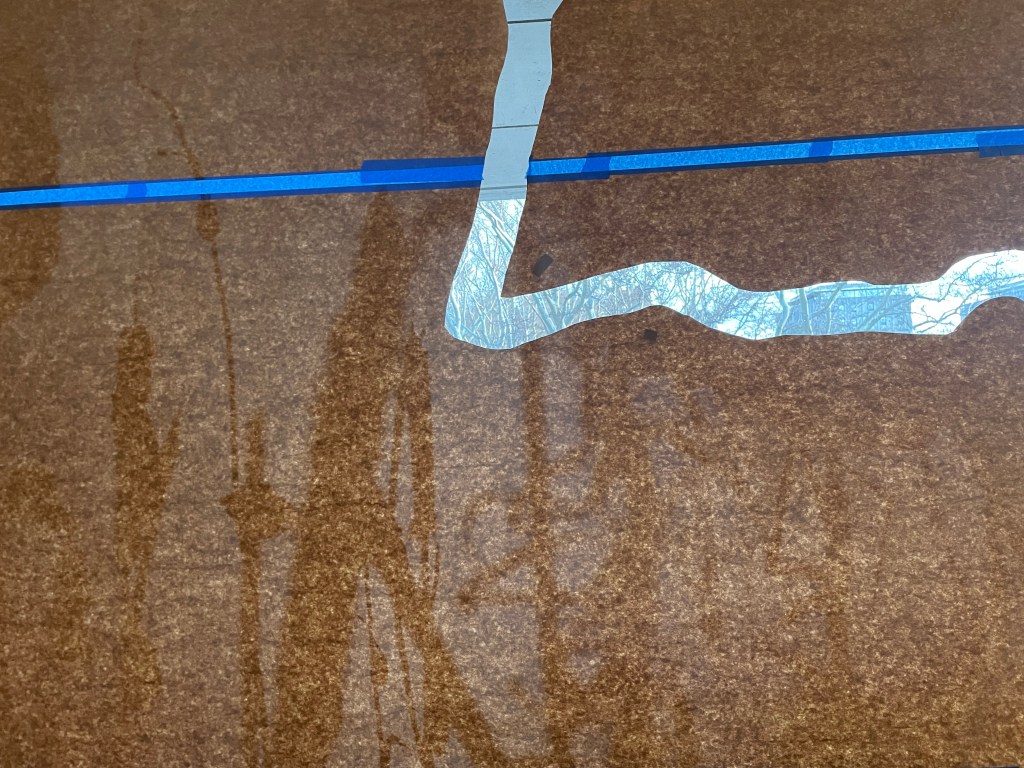
strata, dé rive
2023
19′ x 3′ x 5′
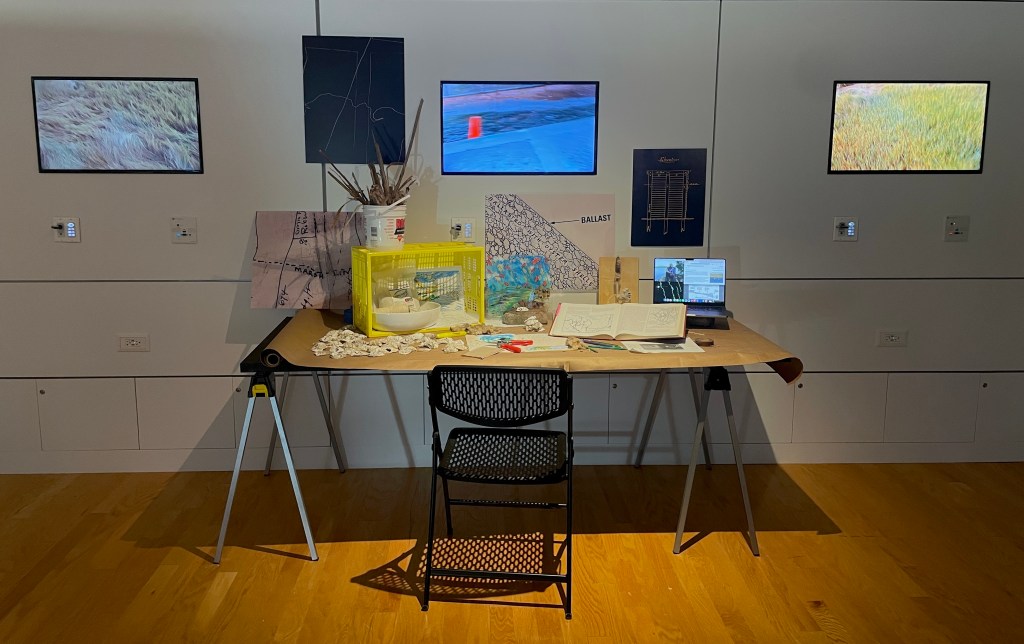
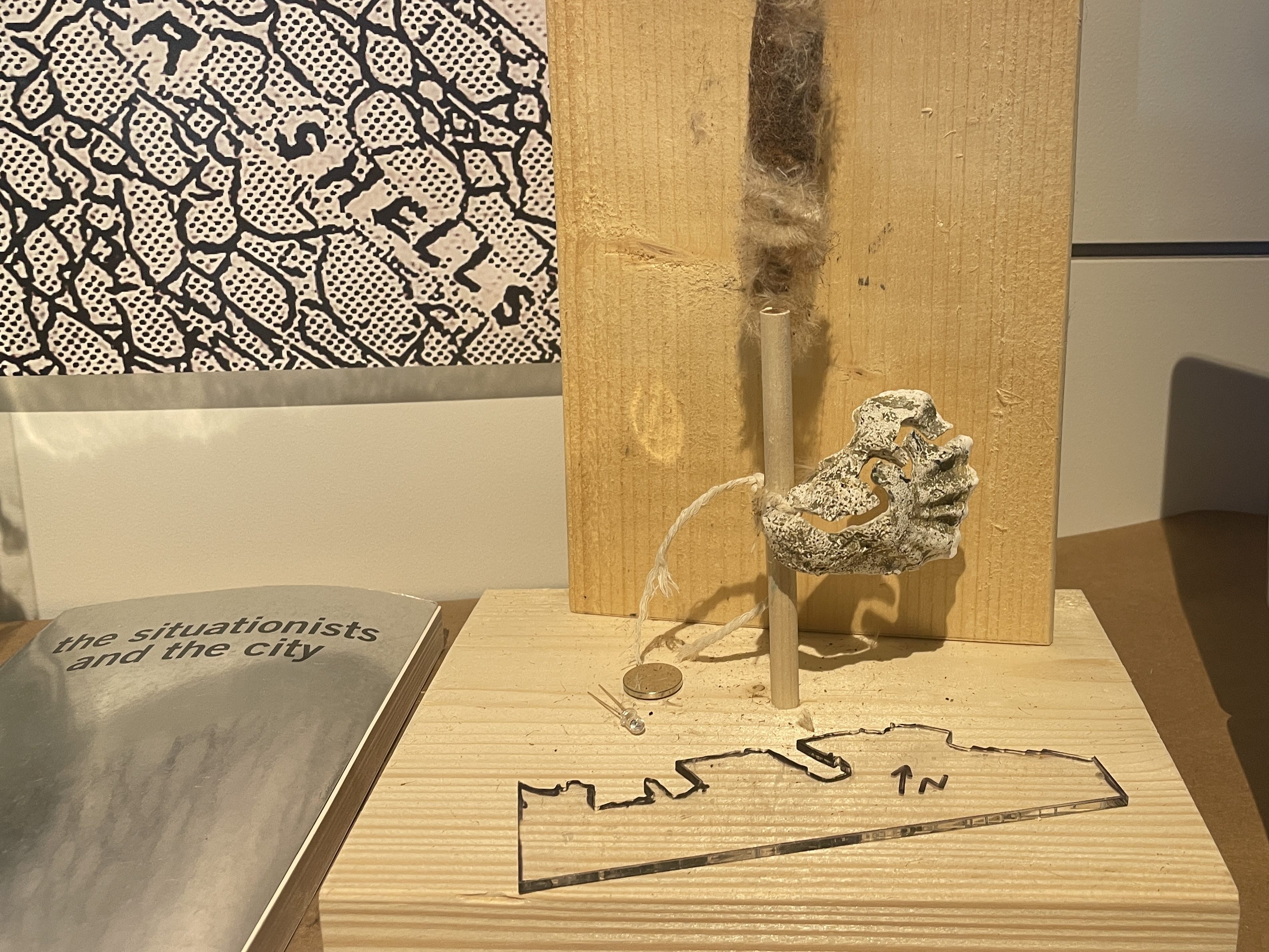
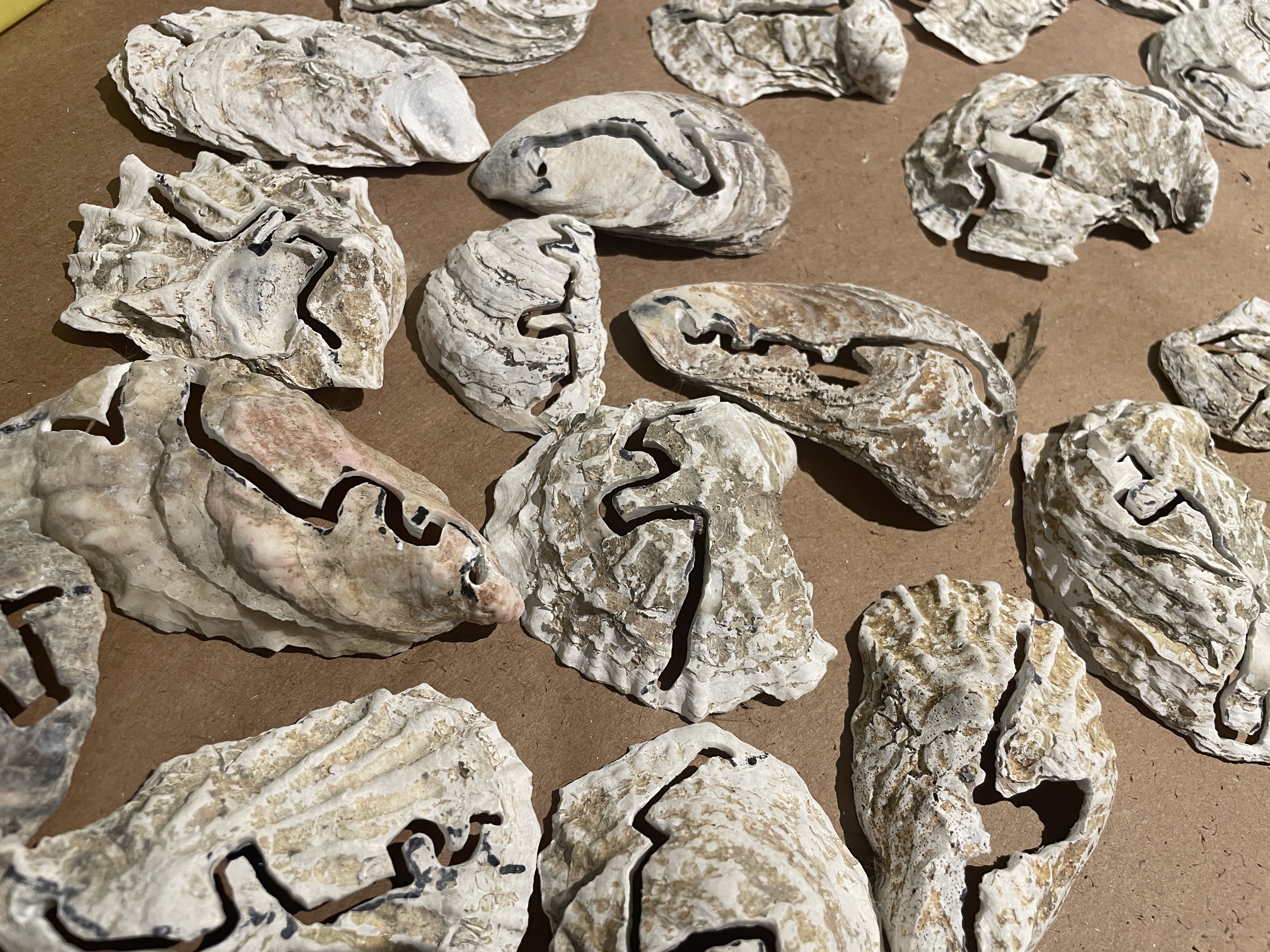
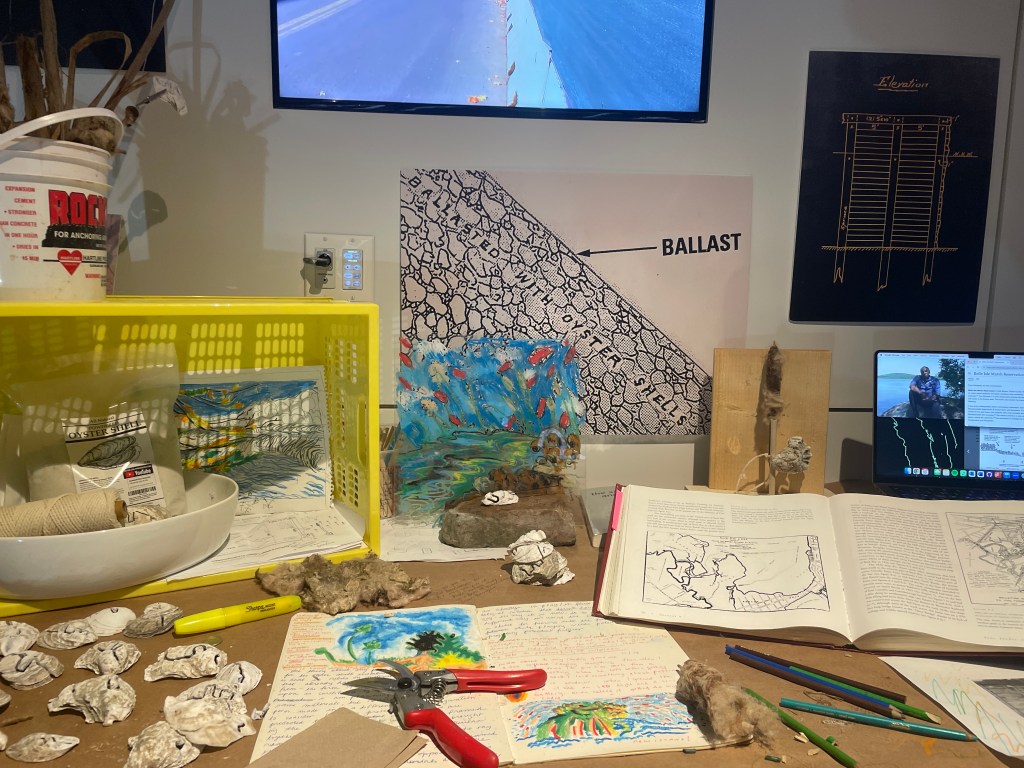
multimedia installation. four channel video, archival images, worktable, borrowed books, sketchbook, carved oyster shells, wax crayon on plexiglass, marsh bricks, construction site bricks, cattail (typha sp.), oyster shell powder, laptop, clippers (gift from sergio)
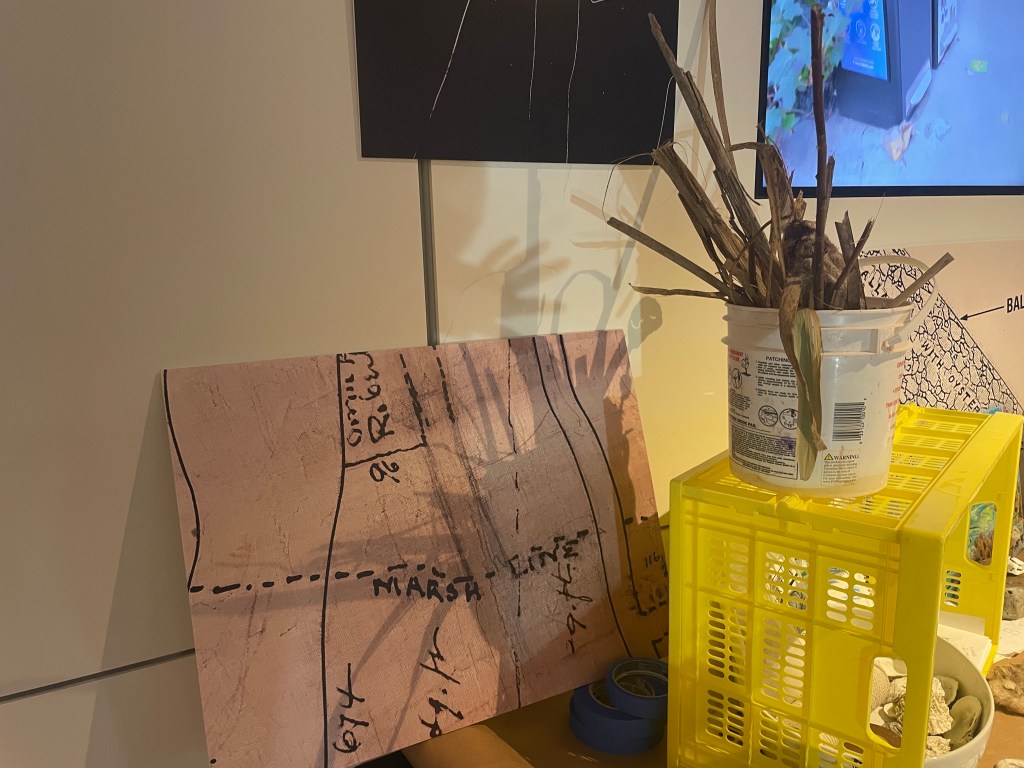
accumulation story
with cristóbal garcía belmont (sound mixing)
2023
5′ x 15′ x 5′
multimedia installation. cleaned oyster shells (legal seafoods), used tarp, borrowed rope, salvaged bricks, 3min looped soundscape (healthy oyster reef, marsh birds, marsh footsteps, unhealthy oyster reef, belle isle marsh atmosphere, laboratory footsteps), portable speaker, work light, bucket, oyster shell powder
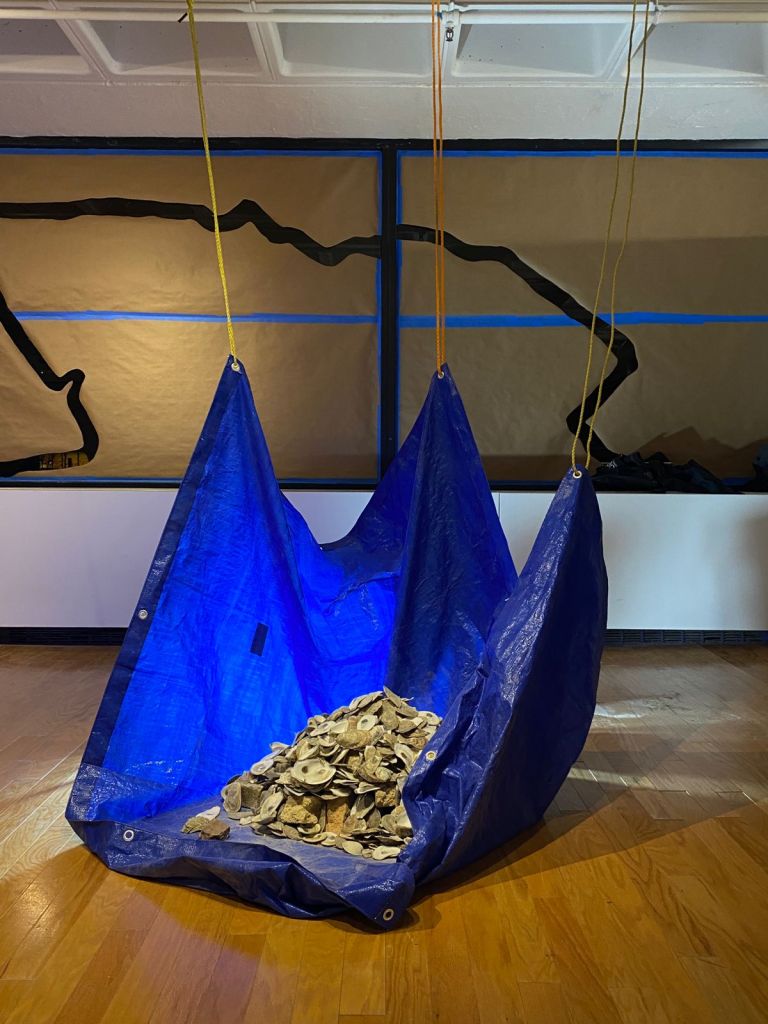
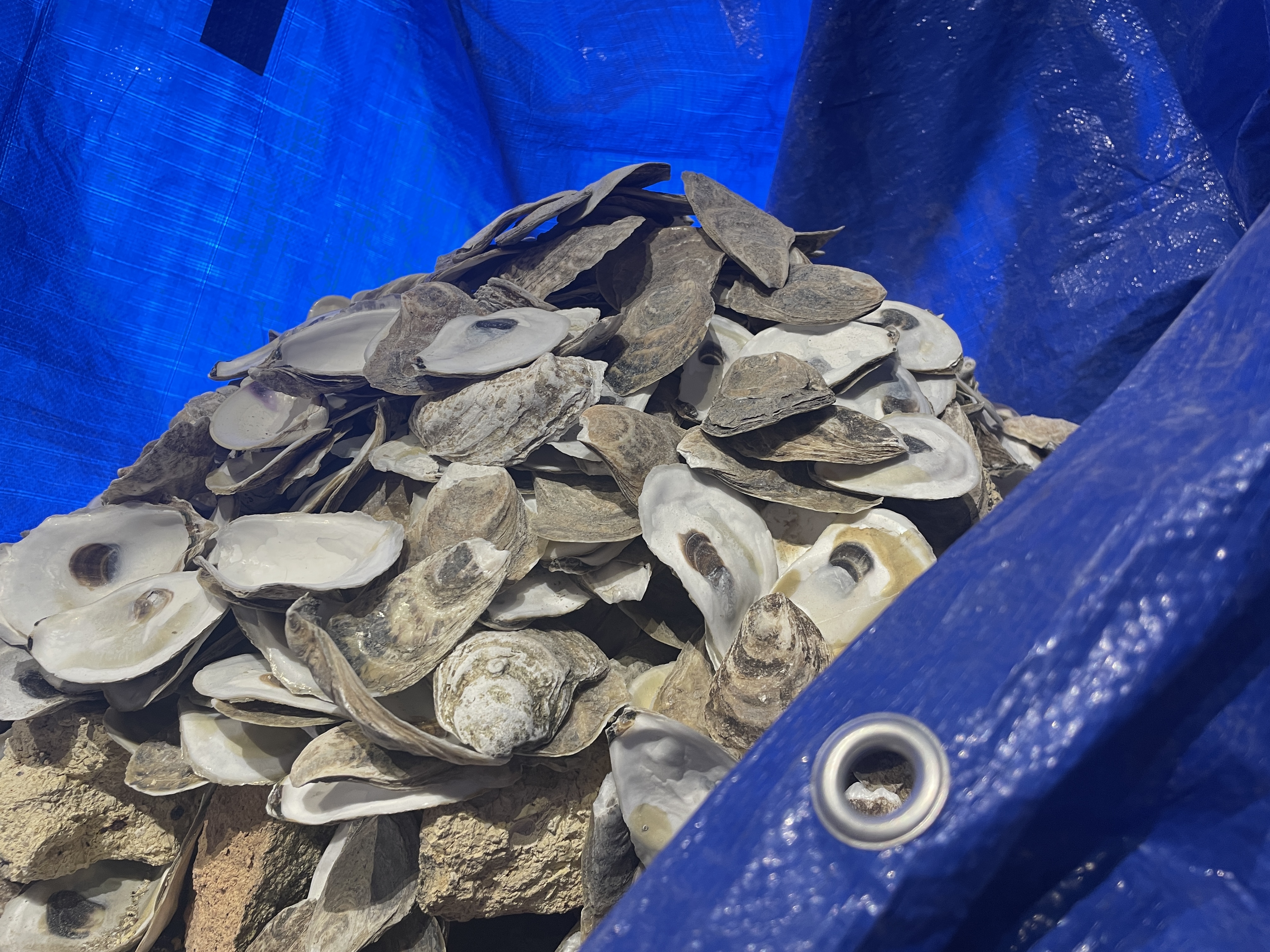
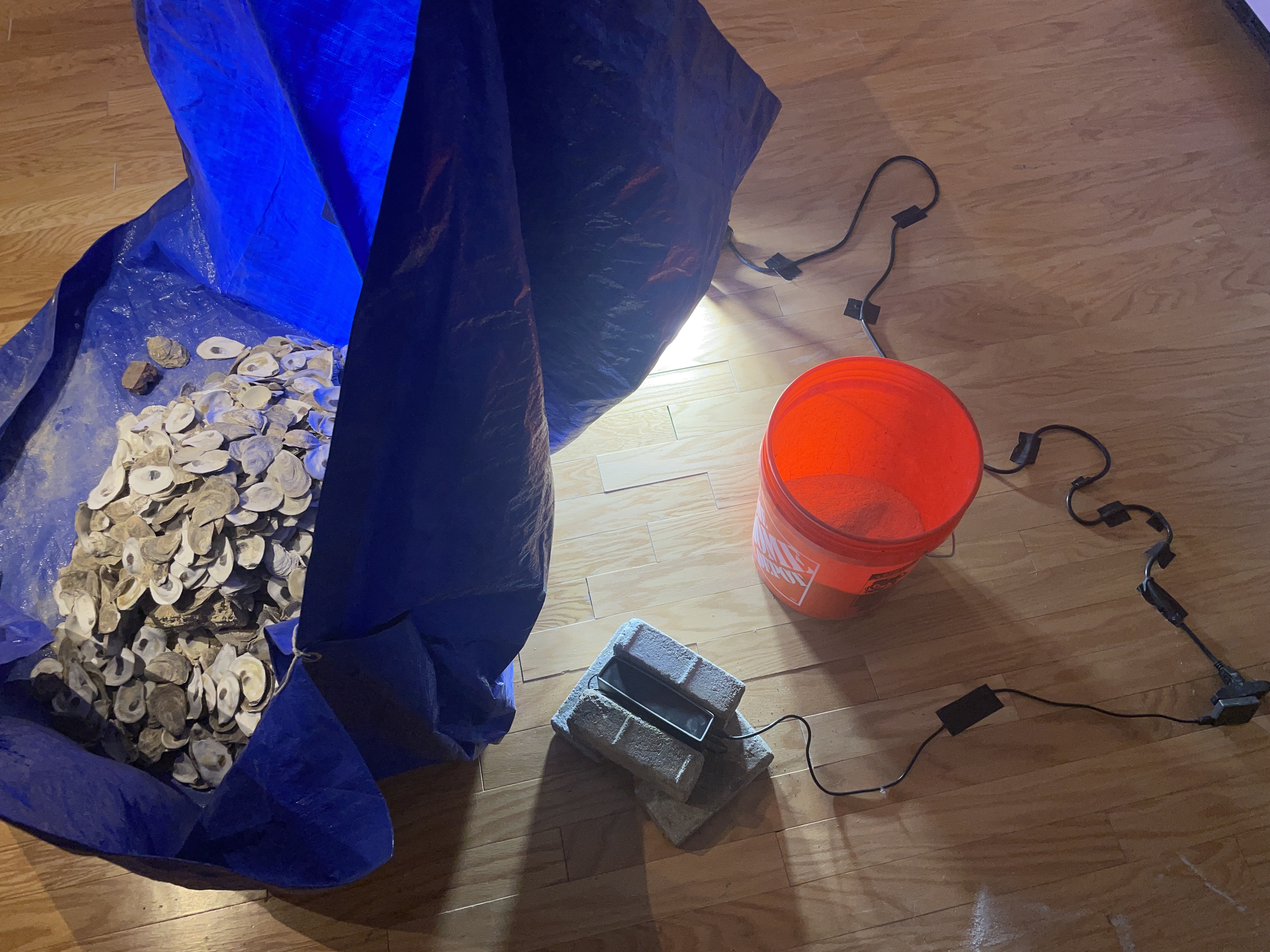
A story about the land change/landmaking of the 1700s along the Charles river in Cambridge, MA, beginning with the raucous stacked sounds of a healthy oyster reef, marsh birds, walking footsteps in the marsh, and the wind in the marsh; slowly, these sounds drop away and are replaced by the sounds of an unhealthy oyster reef, which ultimately gives way to soft sounds of footsteps recorded in the MIT.nano laboratory.
marsh line
2023
31′ x 2″ x 6″
powdered oyster shell
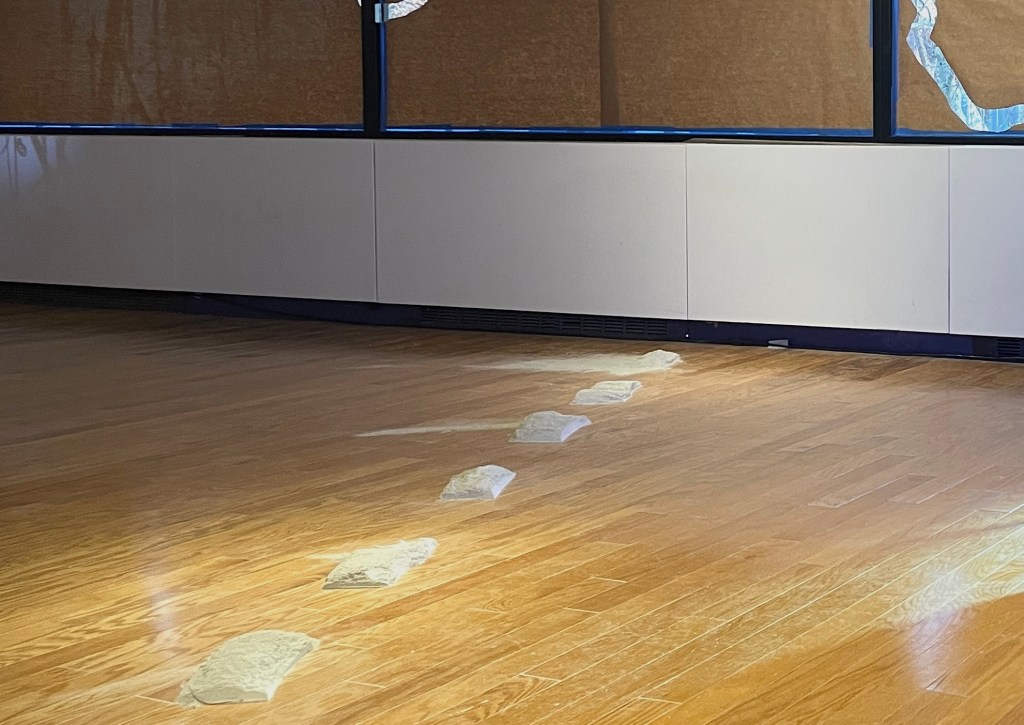
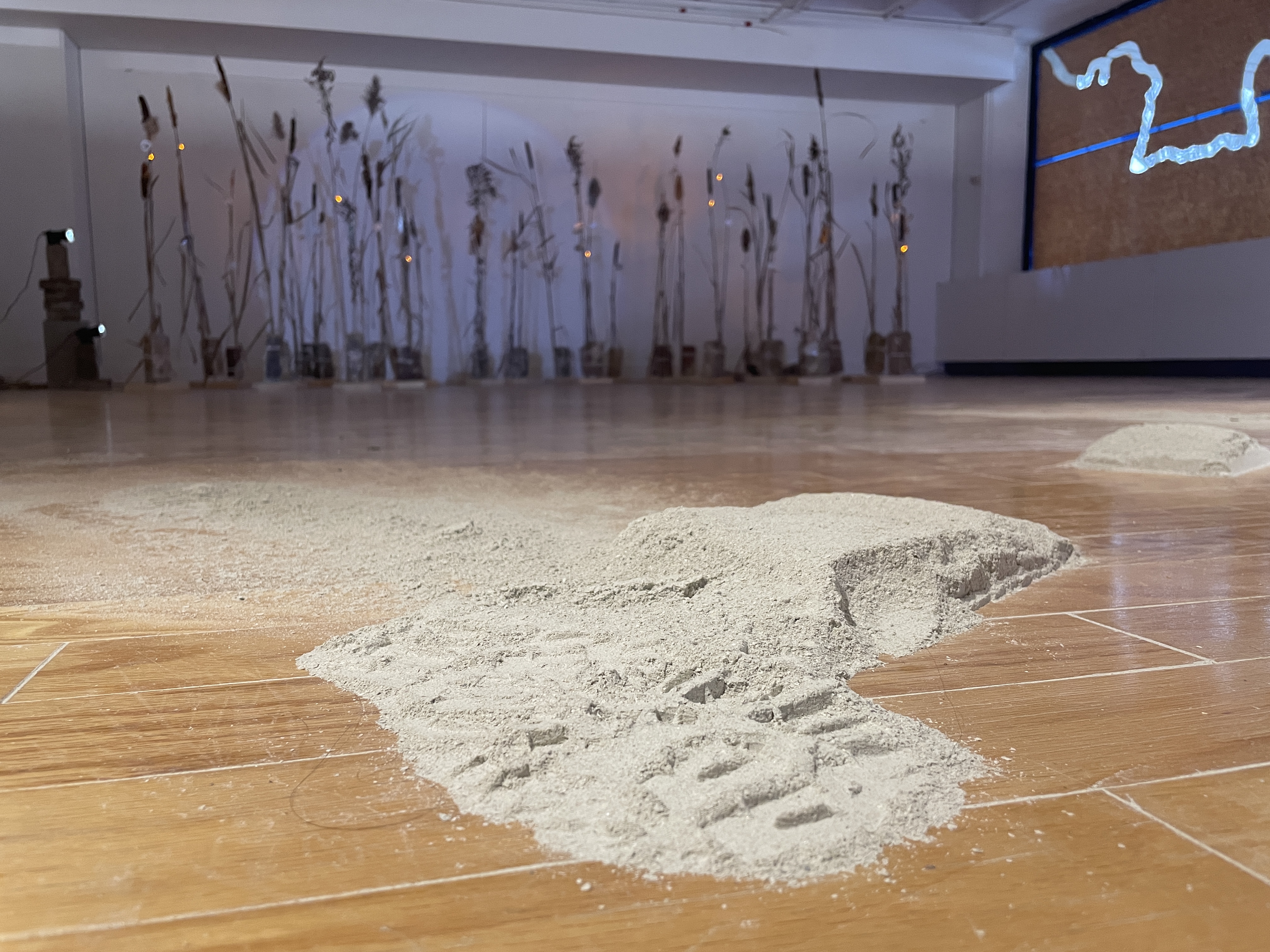
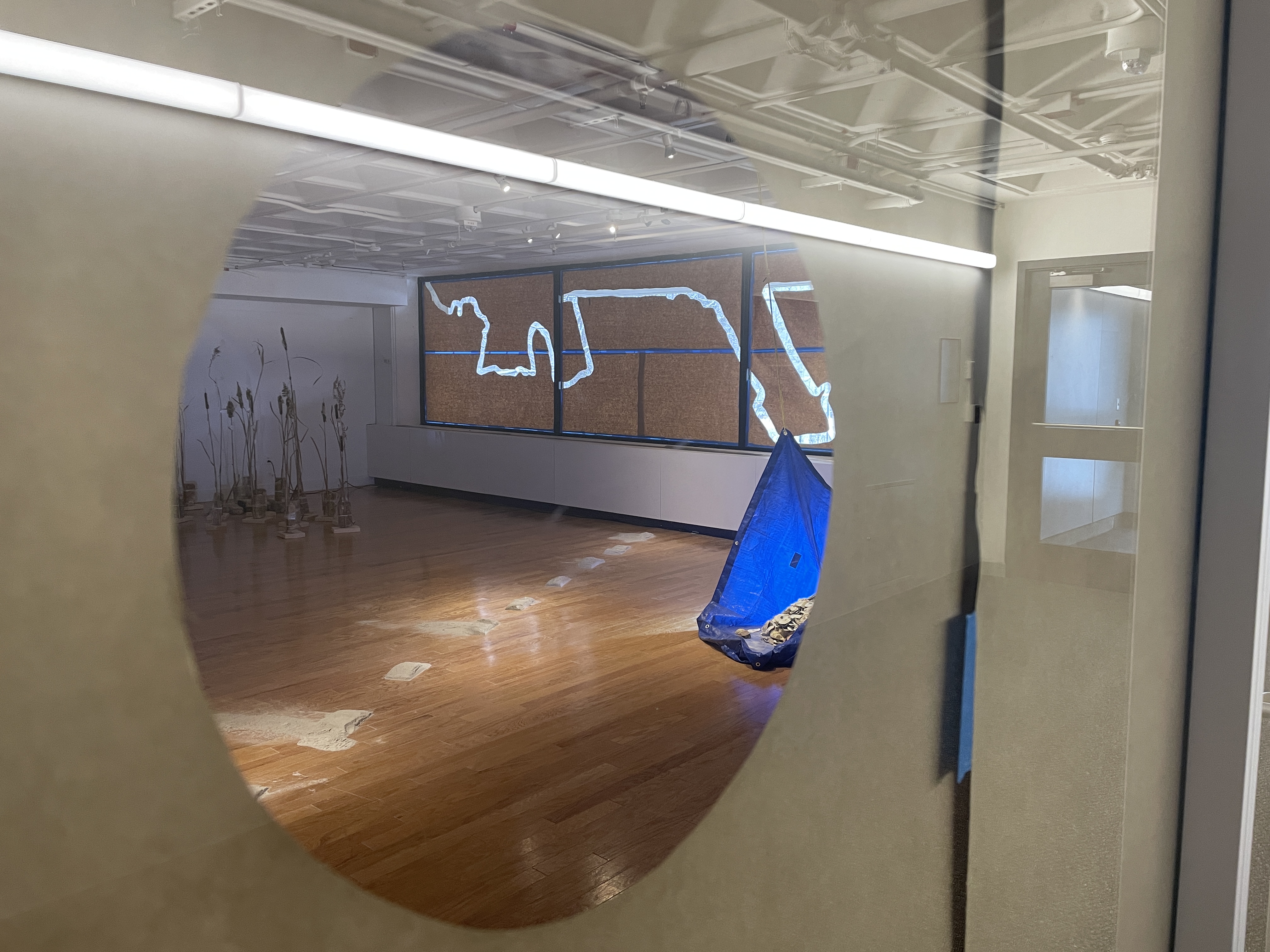
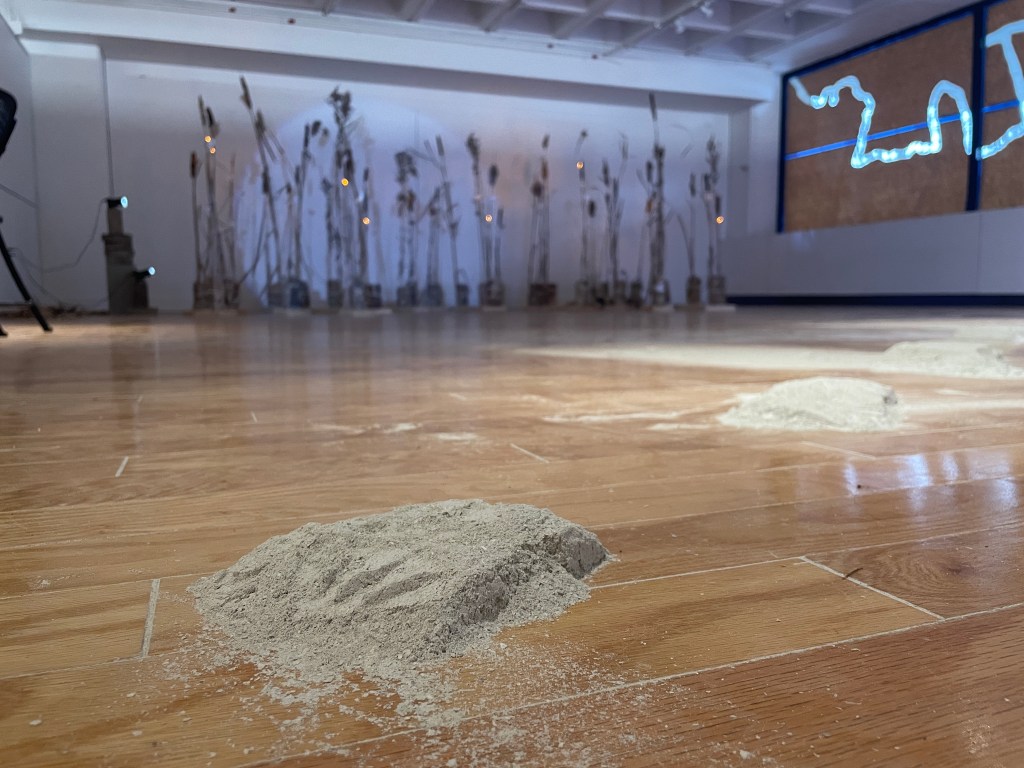
A body knows the hardness of a landscape. Impervious things create the conditions for impervious things.
This exhibition uses the hardening of the river shoreline as a lens to make sense of MIT’s ecology (why does it feel like this?). Over a geological blip of a time period, the marshy, winding, and fluctuating river form of Quinobequin—whose shore would have run through the gallery where this work was installed—was dredged, straightened, and made static. These enormous industrializing and colonizing efforts created the Charles river as we know it today.
We are material and profoundly ecological beings: where we are is who we are. Using techniques of assemblage, counter-mapping, projection, and ecological and archival exploration, the site-specific material sketches in this show ask how shadows cast by the once winding river might illuminate small fissures in the psychogeographic landscape of the MIT campus.
this work generously funded by the council for the arts at mit
 aubrie's bounce zone